Communication Sciences & Disorders
Combining science, technology and rehabilitation to help others – and improve lives.
Across a variety of settings in healthcare and education, Speech Language Pathologists and Audiologists are called on to provide important services to vulnerable populations – diagnosing and treating a wide range of communication disorders.
Through our nationally-known program, students gain clinical hours, research experience, and skills working with state-of-the-art equipment – all before they graduate.
Our department offers a bachelor’s degree in pre-speech language pathology and pre-audiology, as well as a master’s degree in Speech Language Pathology.
Ranked
UNI’s speech-language pathology M.A. was recognized as a “Best Graduate Schools for Speech-Language Pathology” (U.S. News and World Report, 2021).
Employment Rate
The employment rate for speech-language pathology graduate students is 100% with the only exceptions being students who choose to delay employment.
Grad School Placement
Nearly 100% of our undergraduate students gain entry into graduate programs in either audiology or speech-language pathology.

The Master of Arts (M.A.) education program in speech-language pathology {residential} at the University of Northern Iowa is accredited by the Council on Academic Accreditation in Audiology and Speech-Language Pathology of the American Speech-Language-Hearing Association, 2200 Research Boulevard, #310, Rockville, MD 20850, 800-498-2071 or 301-296-5700.
Opportunities for Students
Clinical Experience
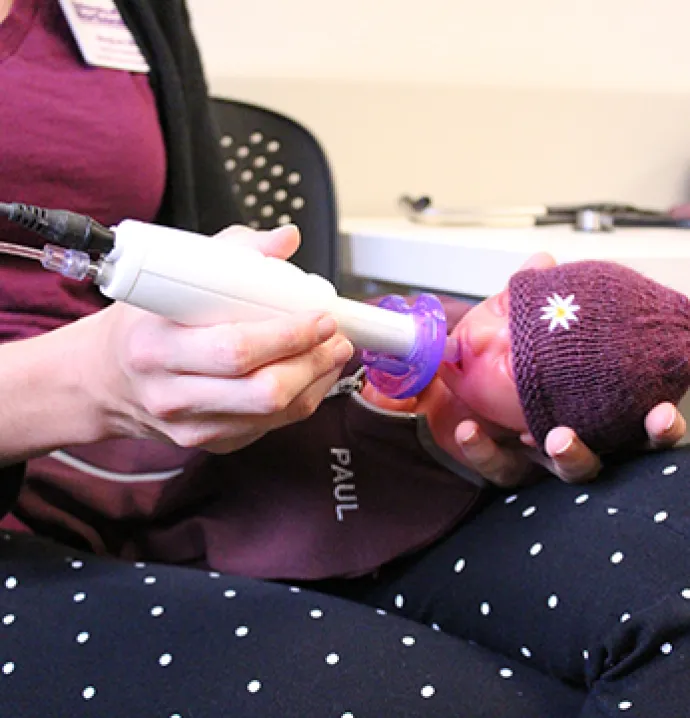
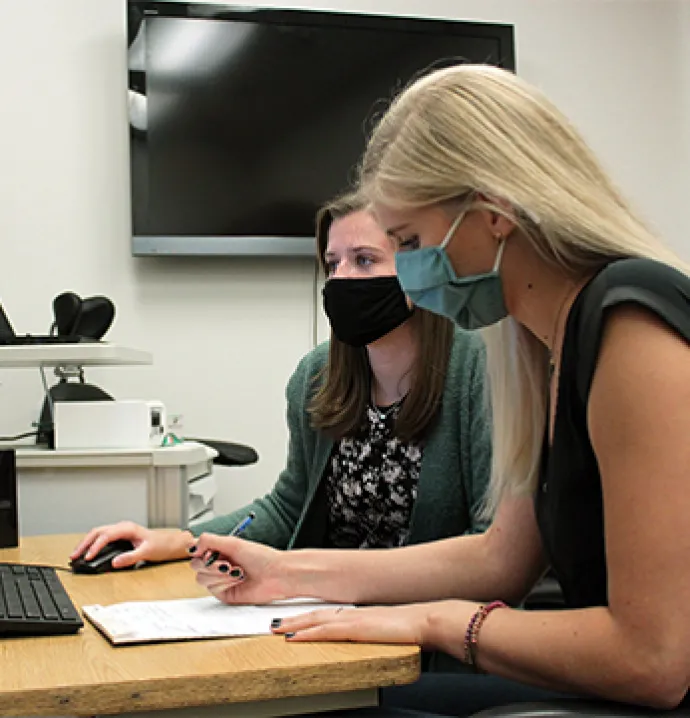
As a student in the UNI Department of Communication Sciences and Disorders, you’ll get real-world, clinical experience before you graduate. Students have the chance to work with clients at the Roy J. Eblen Speech and Hearing Clinic, and the Scottish Rite Learning Center – both located right here on campus.

Internships
Throughout your time here, you’ll have the support of our dedicated faculty, who can connect you with unique internship opportunities with partnering institutions that are leaders in the field.

Research
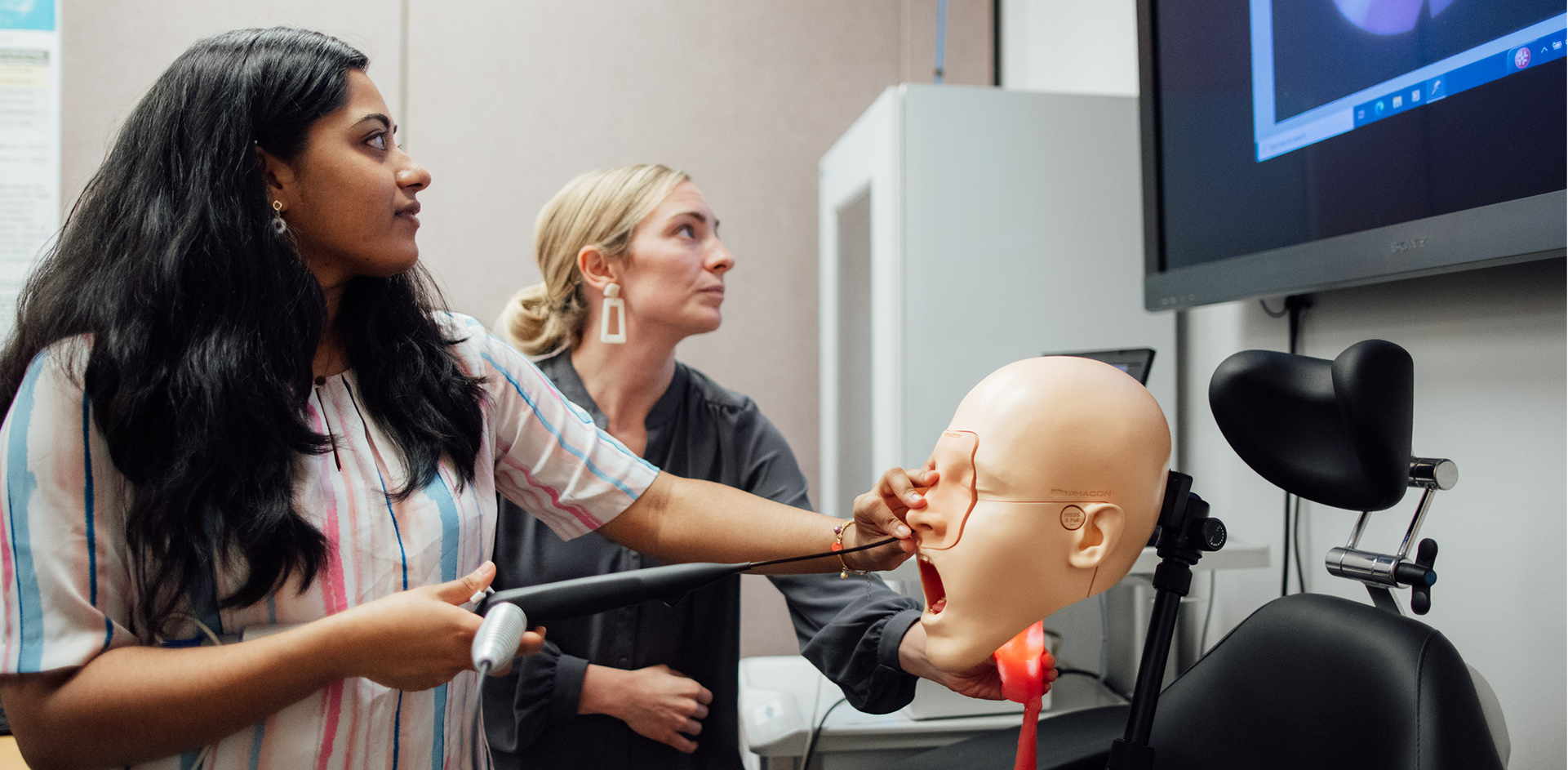
The Sertoma Research Lab is a space where our students and faculty work side by side on innovative research. The lab features several different areas of focus, such as augmentative and alternative communication, swallowing disorders, and voice disorders. Our students work with state-of-the-art equipment, and partner with leaders in the industry on impactful research, giving them unique experiences that set them apart from the competition.

Clinical Experience
As a student in the UNI Department of Communication Sciences and Disorders, you’ll get real-world, clinical experience before you graduate. Students have the chance to work with clients at the Roy J. Eblen Speech and Hearing Clinic, and the Scottish Rite Learning Center – both located right here on campus.
Internships
Throughout your time here, you’ll have the support of our dedicated faculty, who can connect you with unique internship opportunities with partnering institutions that are leaders in the field.
Research
The Sertoma Research Lab is a space where our students and faculty work side by side on innovative research. The lab features several different areas of focus, such as augmentative and alternative communication, swallowing disorders, and voice disorders. Our students work with state-of-the-art equipment, and partner with leaders in the industry on impactful research, giving them unique experiences that set them apart from the competition.