
Undergraduate Research
Join life-changing research, and contribute to the field of science
Through unique undergraduate research experiences, our students have the chance to take their learning beyond the classroom – solving real-world problems. Working side-by-side with professors, you’ll develop practical skills that set you apart from the crowd, and have the chance to publish your work for the world to see.
Nearly half of all biology majors take advantage of high-impact, individualized instruction through Undergraduate Research, Independent Study, and LSAMP before they graduate. As a result, about half of biology faculty journal publications include student coauthors.
Further down this page, you will find important information for students who want to add a research component to their education in biology.
Why do research as an undergraduate?
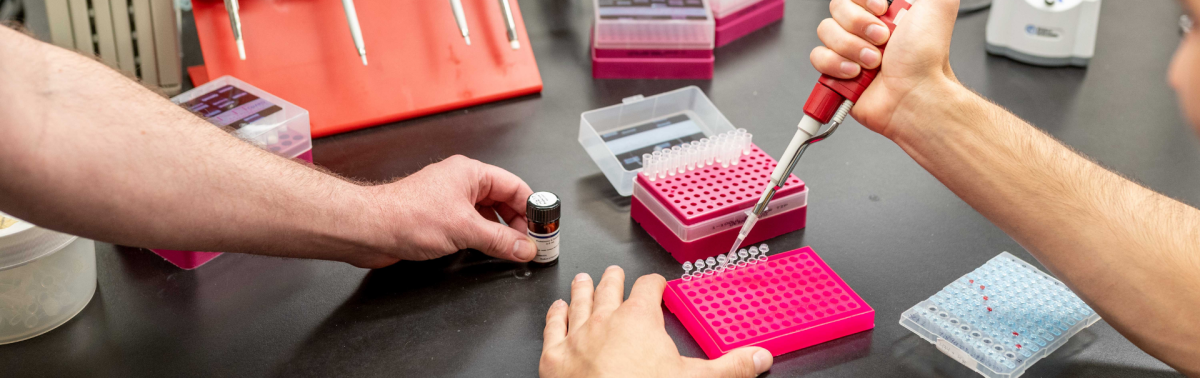
Students who do scientific research as undergraduates repeatedly say the same thing: it changed their lives. They get to be discoverers of scientific information rather than consumers. It makes them more competitive when applying to jobs or graduate and professional schools.
In fact, these life-changing research experiences have propelled our recent graduates to conduct graduate work at top universities including Harvard and Stanford. But most of all, they chose to conduct research to join the ranks of scientists, and seekers of knowledge following a centuries-old intellectual tradition.

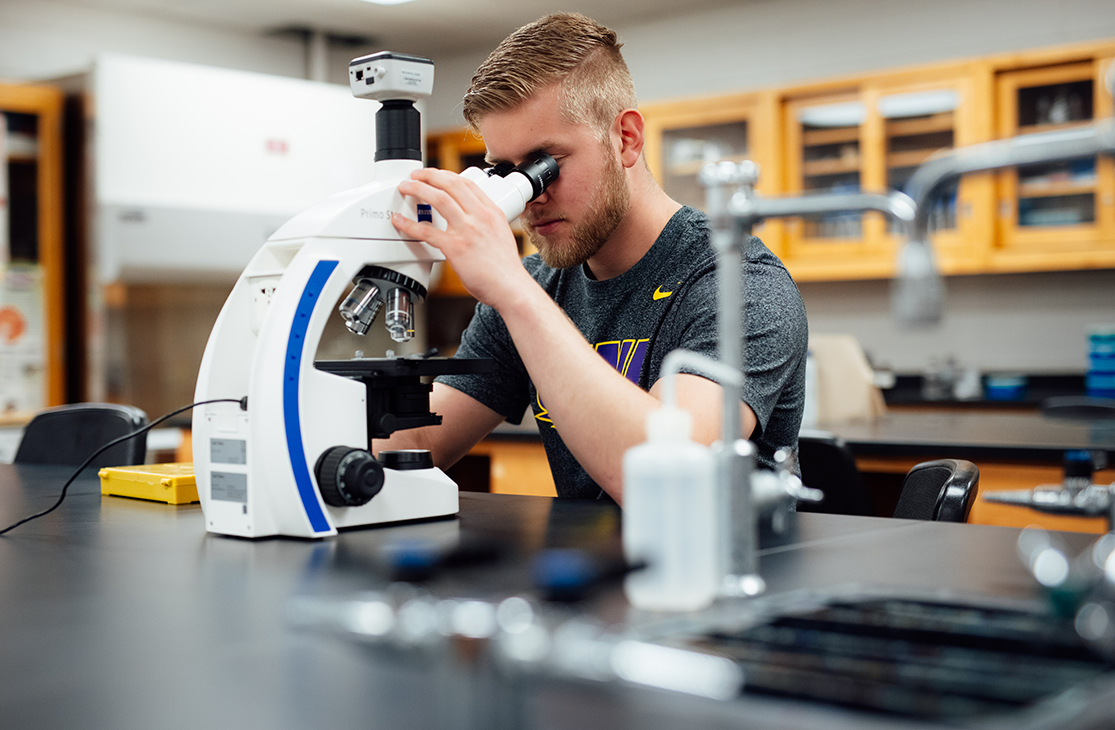
Undergraduate Research Opportunities
Research opportunities are available for qualified students in the Department of Biology. There are over 20 departmental faculty involved in research in subfields including:
- Anatomy and Physiology
- Cell and Molecular Biology
- Ecology, Evolution, and Organismal Biology
Biology students curate fiddler crab collection for American Museum of Natural History

Find a Research Area
Students interested in participating in undergraduate research should read about faculty research interests and then contact potential faculty mentors in their areas of interest.
See previous student research topics
This collection on UNI ScholarWorks contains work by undergraduate students in the UNI Department of Biology. All student works require department, unit, or individual faculty review.
How do I get involved?
Opportunities for involvement in undergraduate research in the Department of Biology include:
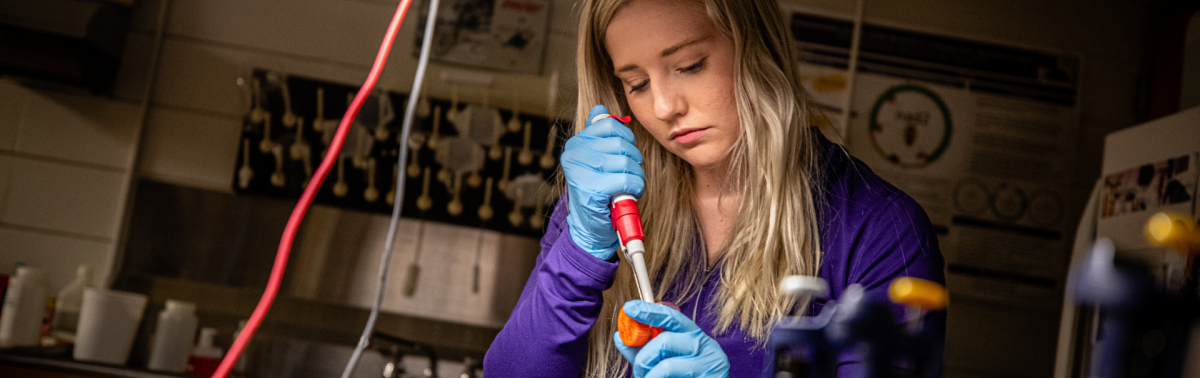
- Volunteering
Many professors need extra help in the lab or field, but do not have grants or other funded positions to pay students. Faculty may rely on student volunteers to assist with research in this situation.
Volunteering is a good option to get a first experience in research without a large time or financial commitment. Some faculty may require students to first volunteer for a semester to gain experience before doing research for academic credit or in a funded position.
Start by contacting faculty members whose research interests you and see whether they need assistance.
- Independent Study (BIOL 4198)
This is a good option if you want some research experience, but do not have the time or desire to turn it into a fully-developed research project.
Students may enroll for 1-2 credits per semester (with the expectation of about 3 hours of research activity per week per credit hour).
- Undergraduate Research (BIOL 3190)
This is a good option if you’re interested in being involved in a long-term research project spanning multiple semesters or years.
Students wishing to complete a senior honors thesis in biology must complete 4 credits of BIOL 3190. Most students choosing Undergraduate Research enroll for 1-3 credits per semester with the expectation that each credit involves about 3 hours of research activity per week per credit for the duration of the semester.
Completion of BIOL 2051 & 2052, sophomore standing, and consent of the department are required prerequisites.
- Work Study
If you have federal work-study eligibility from Financial Aid, contact Shelly Frein (Shelly.Frein@uni.edu) in the department office to see if there are opportunities to work with a faculty member.
- Summer Undergraduate Research Program (SURP)
The Summer Undergraduate Research Program in the Department of Biology is a competitive program with applications due in the fall. SURP students are paired with faculty mentors to do independent research during the summer. If selected, students first enroll in one credit of Readings in Biology (BIOL 3185) to develop a research plan in conjunction with their faculty mentor. Students complete their research during the 10 week summer program and receive a $4,000 stipend (with the expectation of 40 hours of work per week).
Students work full time during the summer in the lab/field. All Biology summer research students present their research in poster form at a formal science symposium at the end of the summer at the College of Humanities, Arts & Sciences Undergraduate Research Symposium held late July or early August. The following Fall, students enroll in 3 credits of Undergraduate Research (BIOL 3190) for work completed over the summer. Students also take the Undergraduate Research Seminar (BIOL 3189) and give a conference-style oral presentation of their research to the department and university community. There is no summer tuition charged for SURP (the academic credits are awarded in the fall).
- Senior Thesis
One of the options for biology majors is to add an emphasis in honors research. This emphasis can be added to the following degrees: Biology: Biomedical, B.A., Biology B.A. or B.S., and Biology: Ecology, Evolution, & Organismal Biology, B.A. The student must complete a minimum of 4 credits of research (BIOL 3190) over the course of two or more semesters; any further research credits count as University elective credits. In addition, the student must register for one credit of senior thesis (BIOL 3191) and write a formal senior thesis according to departmental guidelines in fulfillment of that credit.
What else do I need to know or do?

Think ahead!
Applications for professional schools are typically due in the fall. If you want research experience to go on your application/resume, you need to get involved early in your academic career.

Reliability, responsibility, and enthusiasm.
Faculty value mentoring students with good work habits who are excited to learn.

Take Initiative.
Reach out to potential faculty mentors about research opportunities. Explore faculty research interests. Start by sending an email or by introducing yourself in person.

Persistence.
Don't be discouraged if a particular faculty member's lab is "full." Keep trying!

Keep it short and simple.
When introducing yourself, say why you are interested in getting research experience and what your interests are, and ask whether there are any opportunities available.